
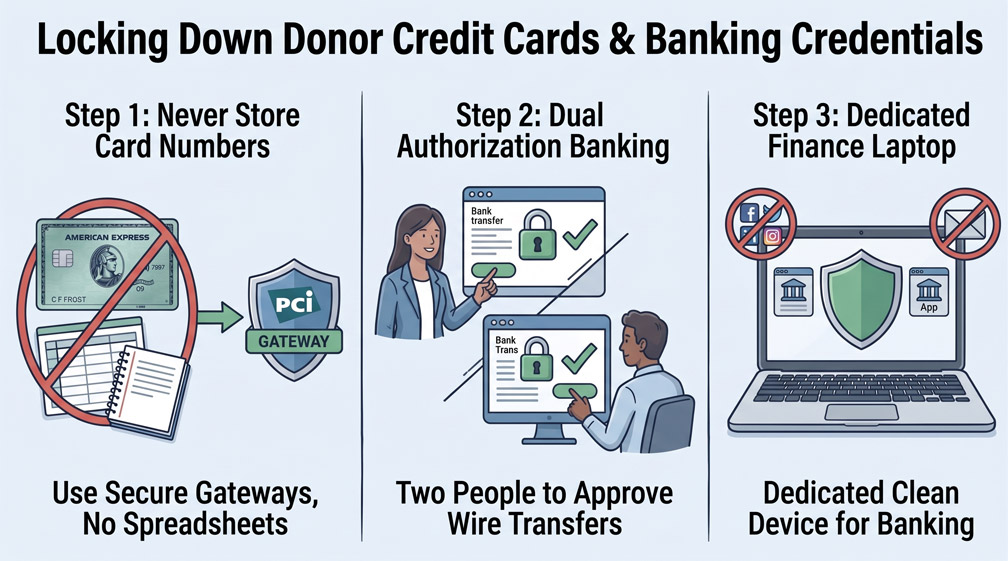
Nonprofits depend on community trust and donor goodwill to fund their missions. If sensitive donor credit card information or organizational banking credentials become compromised, the reputational and financial fallout can paralyze operations indefinitely. Handling event sponsorships, capital campaigns, and recurring monthly donations requires rigorous adherence to Payment Card Industry Data Security Standards (PCI DSS) and airtight internal banking controls.
Step 1: Eliminating Unencrypted Card Data Storage
Under no circumstances should staff or volunteers write donor credit card numbers on paper intake forms, type them into unencrypted spreadsheets, or receive card numbers via email. Standard operating procedure must dictate that card information is entered directly into a secure, tokenized merchant processor gateway (such as Stripe, PayPal Giving Fund, or DonorPerfect). Once an online donation processes, only the tokenized reference and the last four digits of the card should exist inside your donor management records.
Step 2: Dedicating an Isolated Workstation for Banking and ACH Operations
Commercial banking sessions should never occur on general-use computers where staff browse social media, open unvetted email attachments, or download public files. Designate a single, encrypted workstation solely for processing payroll, authorizing vendor wire transfers, and logging into the organization’s bank accounts. Enforce browser cache clearing after every session and disable third-party browser extensions on that device to eliminate keylogger risks.
Step 3: Mandating Dual-Authorization for Financial Disbursements
Implement dual-control authorization inside your primary business banking portal for any electronic funds transfer, wire, or automated clearing house (ACH) disbursement exceeding an agreed operational threshold (such as $1,000). Under dual control, the finance coordinator can initiate a payment schedule, but the funds cannot leave the bank account until the Executive Director or Board Treasurer logs in independently from a secondary device to approve the transaction.
0 Comments