
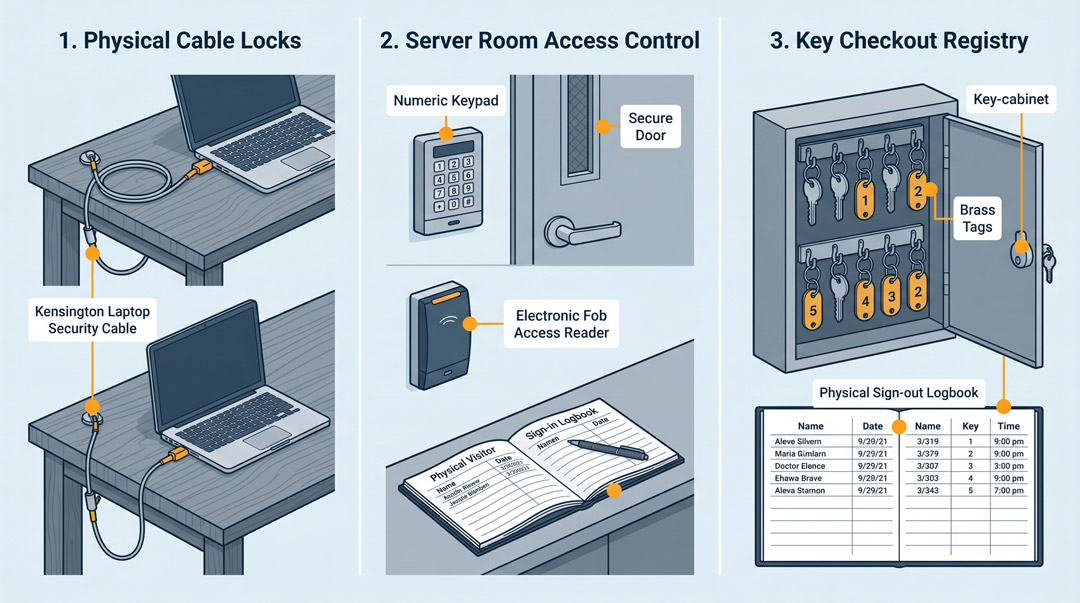
When discussing cybersecurity, non-profit discussions naturally gravitate toward cloud firewalls, anti-phishing software, and complex passwords. Yet, physical theft remains one of the simplest and most common ways non-profit data is compromised. An unmonitored reception desk, an unlocked utility door, or a laptop left on an empty workstation over a holiday weekend can erase months of digital security precautions in seconds.
Secure Workstations with Physical Cable Locks
In offices with high public foot traffic, laptops and compact desktops are vulnerable to opportunistic theft. Equipping shared workstations and registration desks with universal Kensington-style cable locks costs under twenty dollars per desk. Anchoring these steel cables around immovable structural desk legs or heavy furniture immediately deters casual walk-by theft. When machines are not in active use, enforce a policy requiring staff to secure portables in locked pedestals or locking storage carts.
Enforce Multi-Tiered Server and Equipment Room Access
Your core networking equipment, primary switches, and telecom termination blocks house the heart of your organization’s communications. This space should never double as a general storage closet for event banners, extra folding chairs, or coffee supplies. Keep the room locked around the clock. Distribute physical keys or electronic keycards only to authorized operational personnel, and mount a basic physical visitor logbook inside the door so every maintenance contractor signs in and out.
Centralize Key Tracking and Code Management
Physical keys are easily duplicated, misplaced, or forgotten when staff members depart. Maintain a locked, wall-mounted key safe containing all duplicate office and storage keys. Every key must bear an identifiable, numbered tag. Whenever a master key is checked out, the team member must log the date, time, and expected return. When an employee with physical key access departs, rekeying affected exterior doors or immediately rotating electronic keypad pin codes must be mandatory steps on your offboarding checklist.
0 Comments