
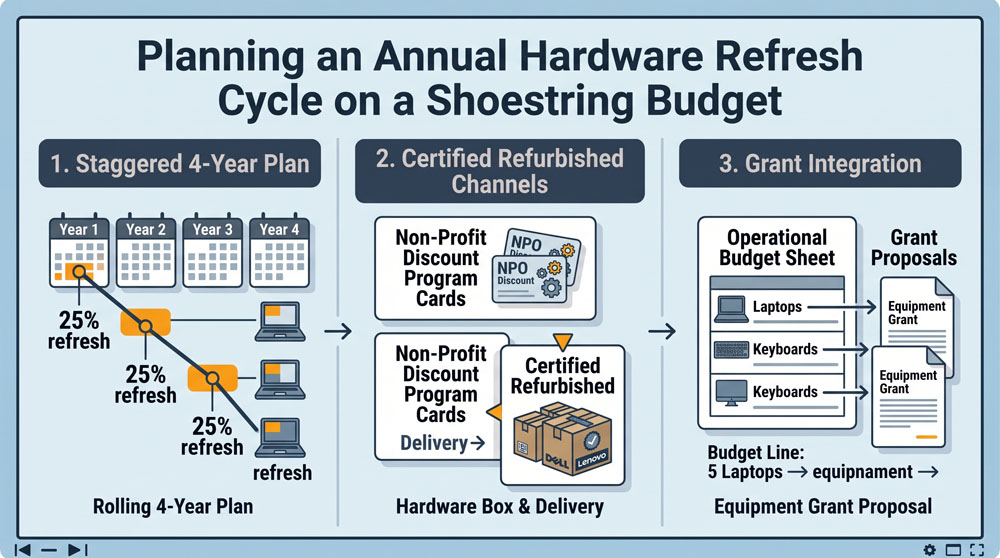
Many non-profits operate under an emergency-driven IT hardware cycle: computers are purchased in a sudden rush after receiving a large donation, used continuously for six years without preventative care, and then begin failing all at once, creating an operational and financial crisis. Breaking out of this stressful boom-and-bust cycle does not require enterprise capital; it requires an annual rolling refresh policy that fits modest operational budgets.
Adopt a Staggered Four-Year Rolling Replacement Strategy
Instead of replacing your entire computer fleet simultaneously every five or six years, adopt a rolling 25% replacement schedule. If your agency operates twenty workstations, budget to replace exactly five computers each fiscal year. Retiring the oldest 25% of your inventory annually spreads capital expenses evenly, prevents mass hardware failure, and ensures your staff always have machines capable of running current security updates and operating systems.
Leverage Non-Profit Discount Programs and Certified Refurbished Units
Paying full commercial retail prices for laptops is rarely a prudent use of donor dollars. Take full advantage of technology donation clearinghouses and non-profit discount platforms (such as TechSoup and major manufacturer refurbisher programs). Commercial-grade enterprise laptops that are two or three years old—returned from corporate leases, professionally refurbished, and equipped with fresh solid-state drives—offer vastly superior durability and performance compared to cheap, retail-grade consumer plastic models at a fraction of the cost.
Build Hardware Refresh Lines Directly into Program Grants
Do not relegate hardware replacement to an underfunded administrative overhead budget. When drafting grant applications for new community programs, include hardware refresh lines as direct, allowable project costs. Whether hiring a new case manager, launching a youth tutoring initiative, or expanding food pantry logistics, itemize the laptop, software licenses, and peripherals required for that staff member directly into the program budget. When donors fund direct operational capacity, your technological ecosystem stays healthy and sustainable.
0 Comments